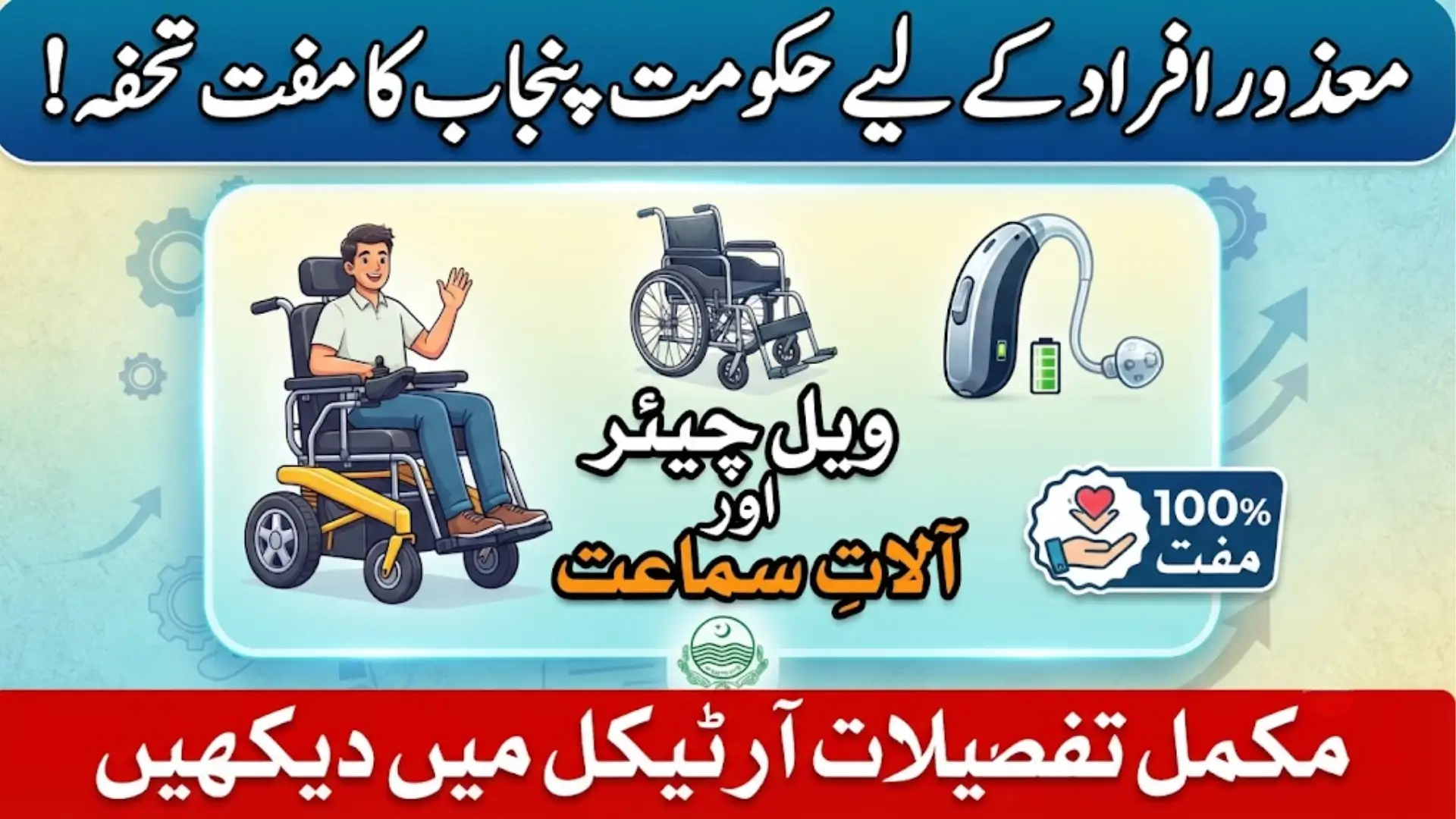
Assistive Devices and Wheel Chair Program
Living with a physical disability becomes much harder when a person cannot even afford the basic equipment needed for daily movement. A wheelchair or a hearing aid is not a luxury item, it is a necessity that decides whether someone can go to school, visit a doctor, or simply step outside their home. The Assistive Devices and Wheel Chair Program was created to make sure cost is never the reason someone is left without this support.
This program is run by the Government of Punjab and gives free wheelchairs, hearing aids, and other mobility devices to eligible citizens. It is aimed at persons with physical disabilities who need proper medical equipment but cannot afford it on their own. This article explains everything a beginner needs to know, from eligibility to the final application steps.
Chief Minister Internship Program 2026: Eligibility, Stipend & How to Apply
What is the Assistive Devices and Wheel Chair Program
The Assistive Devices and Wheel Chair Program is a welfare initiative managed by the Social Welfare and Bait-ul-Maal Department of Punjab. Its main purpose is to give free assistive equipment to people whose physical condition limits their movement or hearing. This includes wheelchairs for adults and children, motorized wheelchairs for severe cases, and digital hearing aids for people with hearing loss.
The program does not just hand out equipment randomly. Every device is given after a proper medical assessment, so that each person receives exactly what fits their condition. This approach ensures that a child needing a pediatric wheelchair does not receive an adult-sized one, and someone with partial hearing loss gets a hearing aid suited to their exact level of impairment.
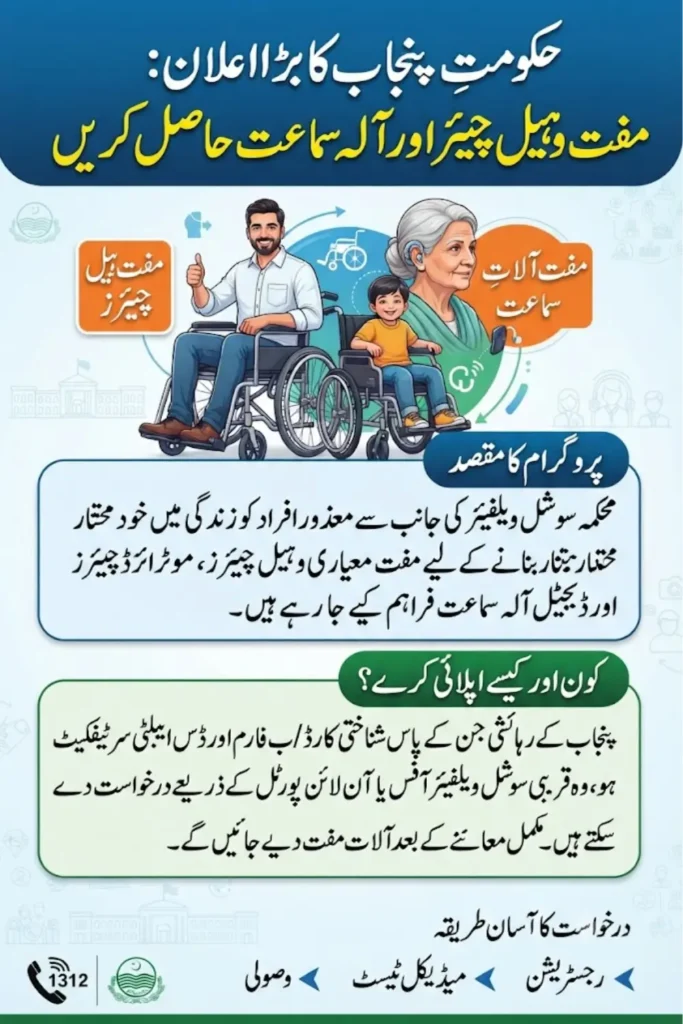
Devices Available Under the Program
Knowing what is actually available helps applicants understand which category their need falls under before they start the process. The program is not limited to a single type of wheelchair, it covers several categories based on age and severity of disability.
Manual Active Use Wheelchairs are provided for adults who have enough upper body strength to move independently. Pediatric Manual Wheelchairs are designed specifically for children with mobility issues. For those who cannot operate a manual chair due to severe physical limitations, Electric or Motorized Wheelchairs are made available. Alongside mobility devices, the program also offers Digital Hearing Aids, complete with batteries and custom molds, for people with hearing impairment confirmed through a specialist.
Eligibility Criteria for the Program
Not everyone can apply directly without meeting certain basic conditions. These conditions exist to make sure the devices reach people who genuinely need them and to keep the process fair for everyone.
- Must be a resident of Punjab province
- Must hold a valid CNIC, B-Form, or guardian’s CNIC in case of minors or intellectually impaired applicants
- Must have a Disability Assessment Certificate issued by the Disability Assessment Board
- Must submit a needs assessment along with the application
- ENT specialist recommendation is required for hearing aid applicants
- Orthopedic specialist recommendation is required for wheelchair and mobility device applicants
Applicants should collect their medical documents from a DHQ or Teaching Hospital before starting the application, since these recommendations are checked carefully before any device is approved.
Devices and Eligibility at a Glance
For a quick understanding of what each category needs, here is a simple summary table covering the main devices and their basic requirements.
| Device Type | Who It Is For | Required Recommendation |
|---|---|---|
| Manual Active Use Wheelchair | Adults with upper body strength | Orthopedic specialist |
| Pediatric Manual Wheelchair | Children with mobility issues | Orthopedic specialist |
| Electric/Motorized Wheelchair | Severe mobility limitation cases | Orthopedic specialist |
| Digital Hearing Aid | Persons with hearing impairment | ENT specialist |
This table makes it easier for a first-time applicant to quickly check which device matches their condition before gathering documents.
Benefits of the Assistive Devices and Wheel Chair Program
The value of this program goes far beyond just receiving free equipment. It directly changes how a person experiences daily life once they have the right device in hand.
- Complete devices provided free of cost
- Improved personal mobility and daily independence
- Reduced dependence on family members or caregivers
- Better access to schools, markets, and community spaces
- Improved hearing and communication for hearing-impaired individuals
- Overall improvement in confidence and social participation
For many families, the cost of a motorized wheelchair or a quality hearing aid is simply out of reach. This program removes that financial burden completely, allowing people to focus on adjusting to their new equipment rather than worrying about how to pay for it.
How to Apply for the Assistive Devices and Wheel Chair Program
The application process has been kept fairly simple so that people from both cities and rural areas of Punjab can access it without difficulty. There are two common ways to begin the process, and applicants can choose whichever is more convenient for them.
Here is a simple breakdown of the application steps for a first-time applicant.
| Step | Action |
|---|---|
| 1 | Visit the nearest Social Welfare and Bait-ul-Maal office, or the official portal |
| 2 | Fill in the application form with personal details |
| 3 | Attach CNIC, B-Form, or guardian CNIC |
| 4 | Attach Disability Assessment Certificate and medical recommendation |
| 5 | Submit the completed application |
| 6 | Track status through the verification portal using CNIC or registration number |
Applicants who need guidance at any stage of this process can call the official helpline at 1312, which is specifically set up to assist people with disabilities and their families.
Important Things to Remember Before Applying
A few practical details can save applicants from delays or confusion during the process. Being aware of these beforehand makes the entire experience smoother.
Devices are assigned strictly according to the medical assessment, so applicants cannot simply choose a device based on personal preference. Assessment sessions are usually organized on specific dates throughout the year, and applicants are informed in advance through SMS about the date and venue. If any issue comes up during processing, complaints can be filed directly through the local Social Welfare office, the official portal, or the 1312 helpline.
Frequently Asked Questions
Who is eligible for the Assistive Devices and Wheel Chair Program? Any resident of Punjab with a valid CNIC and a Disability Assessment Certificate can apply. A proper medical recommendation is also required depending on the device needed.
Is there any cost involved in getting a device? No, all devices under this program are provided completely free of cost. Applicants only need to complete the eligibility and documentation process.
Can a guardian apply on behalf of a child or intellectually impaired person? Yes, a guardian can apply using their own CNIC along with the applicant’s B-Form or relevant identification. This ensures minors and impaired individuals are not excluded from the program.
What documents are required for the application? Applicants need a valid CNIC or B-Form, a Disability Assessment Certificate, and a specialist recommendation from an ENT or orthopedic doctor. These documents must be attached with the application form.
How can applicants check their application status? Applicants can track their status through the official verification portal by entering their CNIC or registration number. Updates are also sent through SMS during the assessment stage.
Conclusion
The Assistive Devices and Wheel Chair Program plays an important role in giving persons with disabilities across Punjab the tools they need to live more independent lives. By covering wheelchairs, pediatric mobility devices, and hearing aids at no cost, it removes one of the biggest barriers families face when caring for a loved one with a disability.
Anyone who meets the eligibility requirements should collect their medical documents early and apply either online or through their nearest Social Welfare office. Taking this step can genuinely improve someone’s daily life and bring them back into full participation with their community.