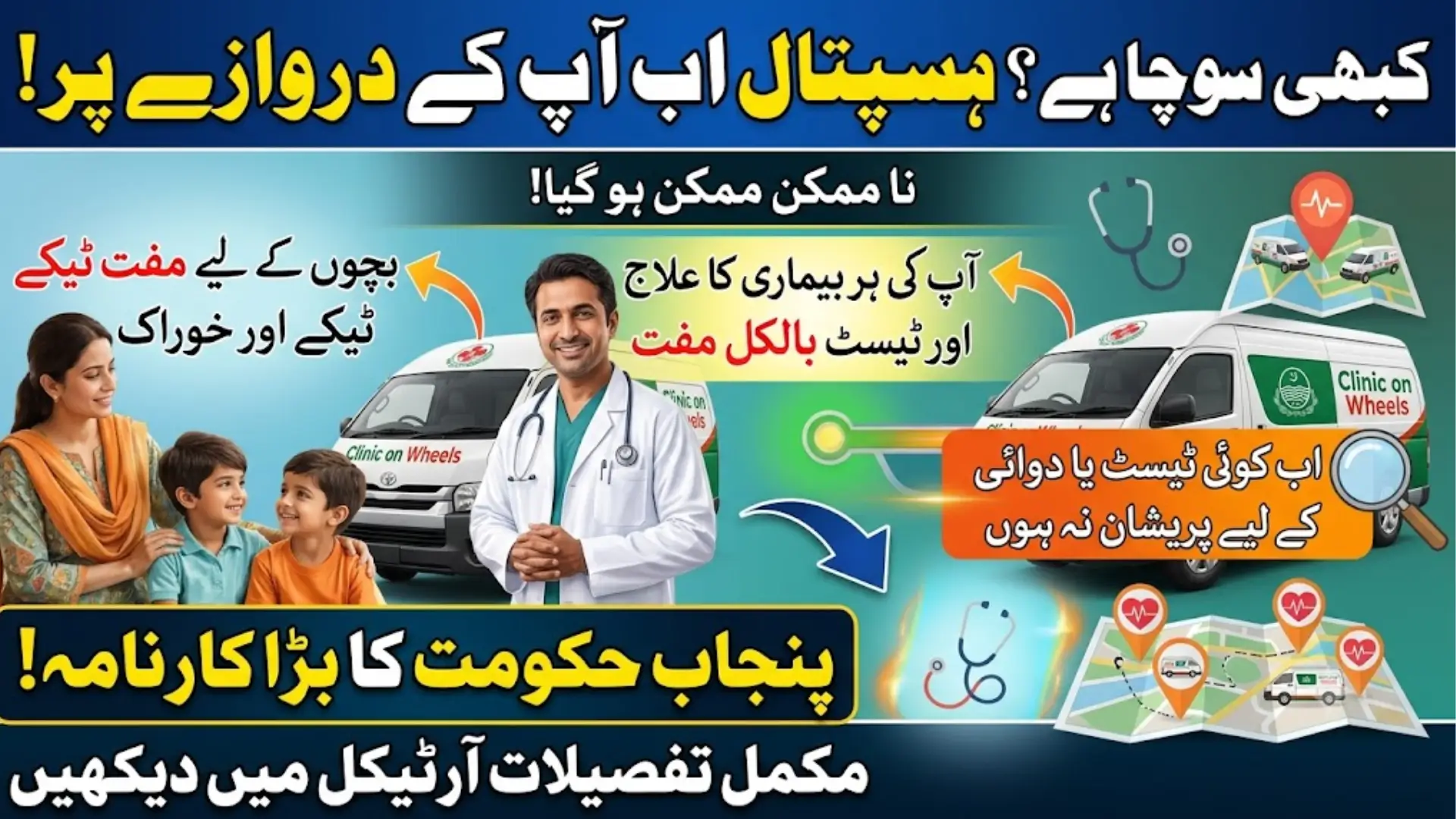
Punjab Clinic on Wheels Program
The Clinic on Wheels Program is Punjab’s answer to a problem that’s plagued the province for years: millions of people simply can’t reach a hospital when they need one. Run by the Primary & Secondary Healthcare Department (P&SHD), it sends fully staffed medical vans straight into urban slums, peri-urban neighborhoods, and now rural districts too.
If you’ve ever watched a family skip treatment because the nearest clinic was too far or too expensive, you’ll understand why this program matters. It doesn’t ask for paperwork, doesn’t charge a rupee, and it shows up where people actually live.
What Is the Clinic on Wheels Program?
The idea started with a gap that the government’s own data couldn’t ignore. Surveys tied to the Punjab Demographic and Health Survey (PDHS) 2019–2020 found that only 57.2% of slum residents had access to healthcare units, which is a striking figure for a province as developed as Punjab. Around the same time, the Punjab Urban Slum Survey estimated that roughly 7.2 million people live in urban slums across the province, many of them dealing with overcrowding and poor sanitation on top of limited medical access.
That data pushed the P&SHD to propose a Chief Minister’s initiative built specifically for these communities. The program was inaugurated by the Chief Minister of Punjab on 10 May 2024 and went live days later, with the first vehicles rolling out on 13 May 2024 in Rahim Yar Khan’s urban slum union councils. Since then, it’s grown from a pilot into one of the province’s largest public health rollouts and honestly, few government health schemes in Pakistan have scaled this fast.
Why Punjab Launched a Mobile Clinic Program
Poor access to care isn’t just inconvenient it shapes outcomes for entire families. Slum residents in Punjab were shown to face higher rates of communicable disease and worse maternal and child health indicators than the general urban population, largely because the nearest Basic Health Unit or Rural Health Centre was too far, too crowded, or too expensive to reach in time.
Rather than build new fixed clinics (which takes years and land that slums often don’t have), P&SHD chose vehicles that could go directly to people. Each district was mapped based on population density, and vans were assigned accordingly a practical fix for a problem that fixed infrastructure alone couldn’t solve quickly.
Services Offered Under the Program
So what actually happens when the van pulls up? A small medical team typically a Medical Officer, a Lady Health Visitor, a dispenser, and a vaccinator sets up shop for the day and works through walk-in patients.
The service list is broader than a typical basic health unit visit:
- Treatment of minor illnesses and referrals to hospitals for anything more serious
- Antenatal and postnatal care, plus family planning counseling and contraceptive provision
- Immunization for children under two years old
- Nutritional screening and treatment for children under five
- Diagnostic testing for Hepatitis B and C, malaria, diabetes, and hypertension
- Health education sessions on prevention and lifestyle changes
- Ultrasound scanning, available on designated ultrasound-equipped vans
Not every van carries every service, though. Ultrasound-equipped vehicles are limited in number and rotate through areas on a schedule, so it’s worth checking with the local team about what’s available that day.
Punjab Dhee Rani Program 2026: Who Can Apply? Full Eligibility, Benefits & Registration Process
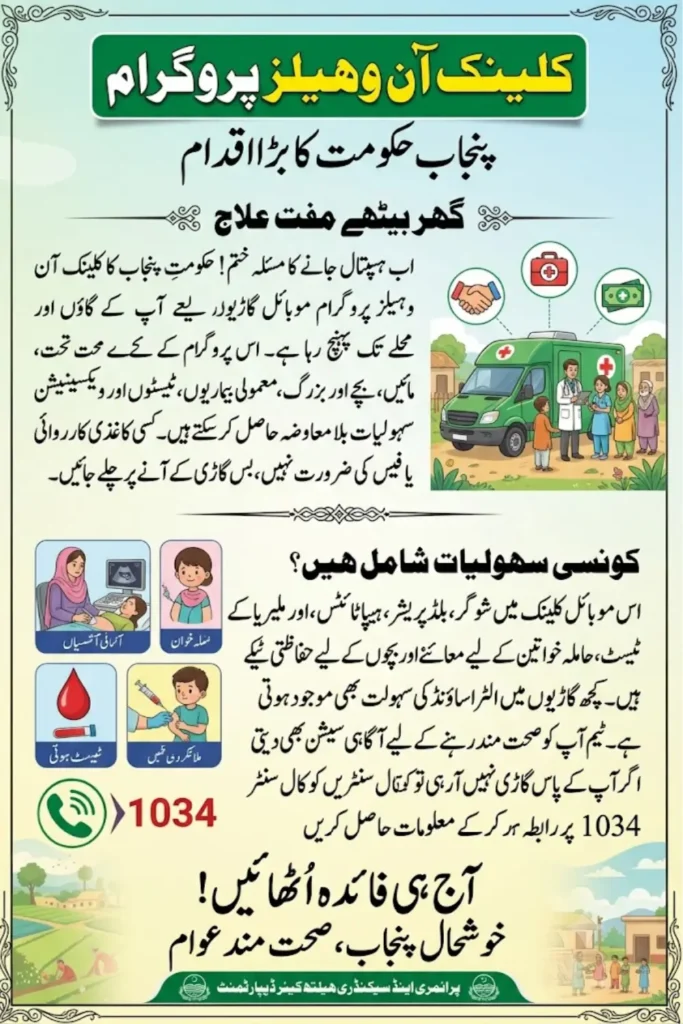
Table 1: Clinic on Wheels Services at a Glance
| Service Category | What’s Included | Who It’s For |
|---|---|---|
| General treatment | Minor illness diagnosis, medicines, referrals | All residents |
| Maternal health | ANC, PNC, delivery-related education, family planning | Pregnant women, women of reproductive age |
| Child health | Immunization, nutritional screening | Children under 5 (immunization under 2) |
| Diagnostics | Hepatitis B & C, malaria, diabetes, hypertension tests | Adults and at-risk patients |
| Imaging | Ultrasound scans | Patients referred or scheduled on ultrasound van days |
| Health education | Counseling on hygiene, disease prevention, lifestyle | General public |
Who Can Use a Clinic on Wheels Van?
There’s no eligibility form to fill out, and that’s by design. The program targets people who’d otherwise go without care, but it doesn’t turn anyone away at the van door. Broadly, it’s built for:
- Residents of urban slums and peri-urban communities across Punjab’s 36 districts
- Women needing antenatal, postnatal, or family planning services
- Children who need immunization or nutrition screening
- Anyone needing treatment for a minor illness or a basic health consultation
- People wanting screening for diabetes, hypertension, or Hepatitis B & C
Basically, if you live near a scheduled stop, you’re eligible. No ID checks, no fees, no appointment booking.
Phase 1 vs. Phase 2: How the Program Grew
The program didn’t stay at its launch size for long. Phase 1 rolled out with a modest fleet, but strong uptake led the Punjab government to scale it dramatically in June 2025.
At launch, the fleet consisted of 245 vans, including 202 passenger vehicles and 42 ultrasound-equipped units. That was enough to establish the model but nowhere near enough to cover all 36 districts properly. On 19 June 2025, Chief Minister Maryam Nawaz Sharif inaugurated Phase 2 in Lahore, and the numbers jumped sharply the expanded phase brought the fleet to 911 mobile clinic units, deployed across all districts of Punjab, with each new vehicle upgraded to include air conditioning and, in some cases, mobile operation theatres.
The scale of impact reported alongside that launch was significant too. Officials said the program had already treated over ten million patients through the mobile clinics operating across Punjab, and that it was reaching more than 45,000 people daily throughout the province by mid-2025.
Table 2: Phase 1 vs. Phase 2 Comparison
| Detail | Phase 1 (May 2024) | Phase 2 (June 2025 onward) |
|---|---|---|
| Total vehicles | 245 | 911 |
| Passenger vans | 202 | Expanded fleet, exact split not officially broken down |
| Ultrasound vans | 42 | Included, upgraded models |
| Coverage | Select urban slum union councils | All 36 districts of Punjab |
| Vehicle features | Standard equipped vans | Air-conditioned, some with mobile operation theatres |
| Daily patients (reported) | Not officially published | 45,000+ |
| Cumulative patients (reported) | — | Over 10 million by mid-2025 |
Worth noting: some third-party websites cite figures like 1,000+ vans or different daily patient counts for 2026. Those numbers haven’t been confirmed through an official Punjab government source at the time of writing, so treat anything beyond the 911-vehicle Phase 2 figure with some caution until it’s verified.
How to Access a Mobile Clinic Near You
Here’s the part people usually ask about first do you need to apply? You don’t. There’s no online form, no CNIC-based registration, and no waiting list.
Mobile clinics follow a set schedule for each area, generally running Monday through Saturday from 9:00 a.m. to 3:00 p.m., with a shorter Friday timing to accommodate midday prayers. Daily assignments for each vehicle are coordinated through the province’s 1034 Call Response Center, which dispatches vans and their medical teams to designated community locations. If you’re not sure whether a van is visiting your area, calling 1034 is the fastest way to check.
Pre-registration, where it happens, is usually handled informally by Lady Health Workers who know the neighborhood, but this isn’t a requirement for walk-in patients. You can simply show up when the van arrives.
Recent Expansion Beyond Punjab
The program’s success in Punjab caught attention elsewhere. In June 2026, provincial officials announced that the Clinic on Wheels initiative would extend to Gilgit-Baltistan, following what officials described as repeated public demand for the same mobile health model in other regions. It’s a sign the government sees this less as a one-province pilot and more as a template it wants to replicate.
Whether this expansion means a corresponding jump in vehicle numbers for Punjab itself isn’t yet clear from official statements, so anyone tracking exact fleet size should check the Primary & Secondary Healthcare Department’s channels for the latest figures rather than relying on older totals.
Clinic on Wheels Program
Mobile Healthcare Services for Underserved Communities Across Punjab
The Clinic on Wheels Program aims to provide quality healthcare services directly to underserved urban slums and peri-urban communities across Punjab. Through fully equipped mobile clinics staffed by trained medical professionals, the initiative delivers preventive and curative healthcare services to citizens who have limited access to healthcare facilities.
- Residents of urban slums and peri-urban areas of Punjab.
- Women requiring maternal healthcare services.
- Children needing immunization and nutrition screening.
- Patients requiring basic medical treatment and health consultations.
- Individuals needing screening for diabetes, hypertension, Hepatitis B & C, and other common diseases.
- Free access to healthcare services near communities.
- Treatment of minor illnesses and referrals for specialized care.
- Maternal and child healthcare including ANC, PNC and family planning.
- Immunization services for children under two years.
- Nutritional screening for children under five years.
- Diagnostic testing for Hepatitis B & C, diabetes, hypertension and malaria.
- Health awareness, counseling and disease prevention education.
No formal application is required. Eligible residents can visit the nearest Clinic on Wheels camp operating in their area. Mobile clinics operate Monday to Saturday and provide healthcare services directly at designated community locations. For information and assistance, contact the Call Response Center at 1034.
Conclusion
The Clinic on Wheels Program has moved from a 245-van pilot to a 911-vehicle operation covering every district in Punjab, and it’s now being used as a model for other regions too. For a family that can’t afford a hospital trip or doesn’t have one nearby, that shift matters more than any statistic. If a van is scheduled near you, there’s really no downside to walking up and getting checked it’s free, it’s quick, and it might catch something worth catching early.
Livestock Asset Transfer to Rural Women in South Punjab: Eligibility & Apply Guide
Frequently Asked Questions
How do I find the Clinic on Wheels schedule in my area?
Call the 1034 Call Response Center, which coordinates daily van assignments across Punjab’s districts. Local Lady Health Workers in slum and peri-urban areas often also know the schedule for their community.
Is the Clinic on Wheels service really free?
Yes. All consultations, basic diagnostics, and listed medicines are provided at no cost, and there’s no registration fee or ID requirement to access care.
What is the difference between Clinic on Wheels Phase 1 and Phase 2?
Phase 1 launched in May 2024 with 245 vehicles covering select urban slum areas. Phase 2, launched in June 2025, expanded the fleet to 911 vehicles covering all 36 districts of Punjab, with upgraded, air-conditioned vans.
Do I need to book an appointment for Clinic on Wheels?
No appointment or online booking is needed. Clinics operate on a walk-in basis when the van reaches your scheduled community stop, Monday through Saturday.
Which health conditions can be diagnosed at a Clinic on Wheels van?
Vans offer diagnostic testing for Hepatitis B and C, malaria, diabetes, and hypertension, along with maternal health checks, child immunization, and nutritional screening. Ultrasound-equipped vans also provide imaging services on designated days.