Punjab Shrimp Farming Project 2026: Locations, Investment, Benefits and Latest Updates

Punjab Shrimp Farming Project
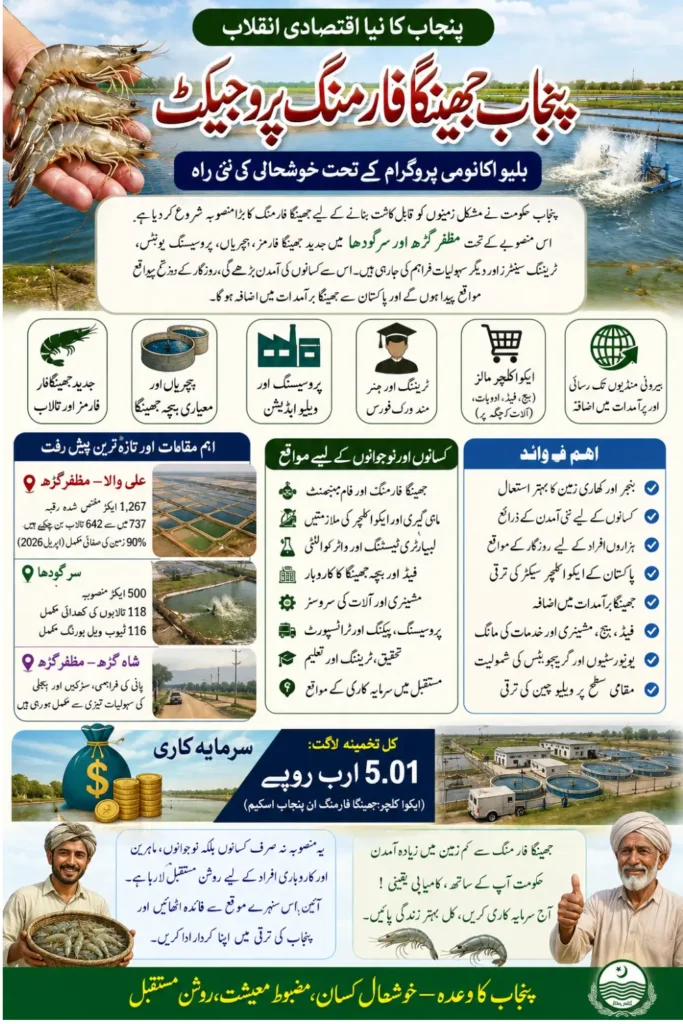
Punjab is moving into a new area of agriculture with a major shrimp farming project. The provincial government is developing shrimp estates, aquaculture facilities and supporting infrastructure in areas where traditional farming is difficult. The plan is part of Punjab’s wider Blue Economy Programme.
The project is not just about producing shrimp. The government wants to build a complete aquaculture value chain, including farms, hatchery facilities, processing, training and support services. Recent official updates show that work is already progressing at sites in Muzaffargarh and Sargodha.
What is the Punjab shrimp farming project?
Punjab’s shrimp farming programme is designed to turn suitable underused and saline land into productive aquaculture farms. The idea is to grow shrimp commercially and create a new source of income, employment and exports for the province.
The Planning and Development Board has listed Aquaculture: Shrimp Farming in Punjab as an ongoing development scheme. The official development documents also include shrimp estates with value-chain facilities at Rakh Ali Wali and Shah Garh in Muzaffargarh.
Hunarmand Punjab Program for Sindh Students 2026 Eligibility, Benefits & Apply Online
| Project area | Current official information |
|---|---|
| Main focus | Shrimp aquaculture and value-chain development |
| Key location | Muzaffargarh |
| Other location | Sargodha |
| Major project sites | Rakh Ali Wali and Shah Garh |
| Supporting facility | Aquaculture malls |
| Main goals | Production, jobs, value addition and exports |
Why is Punjab investing in shrimp farming?
Shrimp farming can give farmers another option where normal crops are less suitable. Punjab already has experience with saline-water aquaculture, and government projects have been testing shrimp production for several years.
The economic goal is also important. A successful shrimp industry can create work in farming, hatcheries, feed supply, laboratory testing, transportation, processing and seafood exports. This is why the government is treating aquaculture as part of its wider economic development strategy rather than as a small fishery project.
Major shrimp estates are being developed
One of the main areas is Rakh Ali Wali in Muzaffargarh. Official development records list a dedicated shrimp farm project there, along with a separate shrimp estate that includes value-chain components. The current development programme places major funding against these projects for the coming years.
There is also a shrimp estate planned at Shah Garh, Muzaffargarh. The Planning and Development Board has described Shah Garh and Rakh Ali Wali as key locations for Punjab’s first shrimp estates with value-chain development.
Ali Wala project is moving ahead
Ali Wala is another major part of the programme. In an April 2026 progress update, the Punjab government reported that 90 percent of the allocated 1,267-acre Ali Wala site had been cleared. Excavation of 642 out of 737 ponds had also been completed, while major drainage and road work was progressing.
This is important because some earlier reports have mentioned larger figures for the overall planned area. The latest official progress information available publicly gives the current Ali Wala site as 1,267 acres, so those figures should not be confused with the broader future expansion plans.
| Site | Latest publicly reported progress |
|---|---|
| Ali Wala | 1,267-acre allocated site |
| Ali Wala ponds | 642 of 737 excavated in April 2026 |
| Sargodha | 500-acre project |
| Sargodha ponds | 118 ponds excavated in April 2026 |
| Shah Garh | Water supply, roads and electrification under development |
Sargodha shrimp farm is also expanding
The government is not limiting shrimp aquaculture to Muzaffargarh. A separate project is being developed in Sargodha on a 500-acre site. In April 2026, officials reported that excavation of 118 ponds had been completed and 116 tube wells had been bored. Land clearing and survey work had also been completed over 365 acres.
The Sargodha project shows that Punjab is testing shrimp farming in different parts of the province. If the results remain positive, the model could be expanded to more suitable locations in the future.
Aquaculture malls will support shrimp farmers
Another important part of the plan is the development of aquaculture malls in Punjab. The official development programme includes an aquaculture mall scheme with funding for the current development period.
These facilities are expected to make aquaculture inputs and services easier to access. For a growing shrimp industry, farmers need reliable seed, feed, technical advice, equipment and other services close to the farms.
Modern technology is changing shrimp farming
Punjab is also moving toward more technology-based shrimp production. Government projects are being developed with modern infrastructure and scientific monitoring instead of relying only on traditional farming methods.
This includes better water management, farm monitoring, machinery and technical support. The focus on value-chain facilities is also important because producing shrimp is only one part of building a successful seafood industry.
What are the main benefits of the project?
The shrimp farming programme could have an impact beyond the farms themselves. A larger aquaculture industry needs workers, technicians, engineers, laboratory staff, transporters, feed suppliers and processing workers.
It could also help Punjab make better use of land that has limited value for conventional crops. The government’s Blue Economy vision is closely linked with this idea of converting underused land into productive economic activity.
Key benefits include:
- Better use of suitable barren and saline land.
- New income opportunities for farmers.
- Employment in shrimp farming and processing.
- Growth of Pakistan’s aquaculture sector.
- More opportunities for seafood exports.
- Demand for feed, seed, machinery and technical services.
- Greater involvement of universities and trained graduates.
- Development of local shrimp value chains.
How will farmers and young people benefit?
The project can create opportunities at several levels. Farmers can potentially become part of the expanding aquaculture supply chain, while young graduates can find work in areas such as fisheries science, water management, laboratory testing, farm operations and technology.
The government has also been developing training and technical capacity around shrimp farming. This is important because commercial aquaculture needs skilled workers who understand water quality, feeding, disease control and farm management.
Potential opportunities include:
- Shrimp farm management.
- Aquaculture and fisheries jobs.
- Laboratory and water-quality testing.
- Feed and seed businesses.
- Farm machinery services.
- Seafood processing and transportation.
- Research and technical training.
- Future private-sector investment.
What does the official data say about the investment?
Punjab’s development documents show that shrimp farming is now a significant part of the provincial fisheries development programme. The ongoing Aquaculture: Shrimp Farming in Punjab scheme has an estimated cost of about Rs 5.01 billion, while separate shrimp estate projects have also been listed for major development spending.
The government is therefore building more than individual ponds. The development plan covers the wider aquaculture ecosystem, including shrimp estates and aquaculture malls. This approach could make the sector more commercially viable if production and market demand continue to improve.
Is the shrimp farming project already producing results?
Punjab has been working on shrimp aquaculture before the latest expansion. The Planning and Development Board has previously recorded shrimp farming cluster development as part of the province’s fisheries programmes.
Recent official progress reports also show that construction and preparation work is active at major sites. At Shah Garh, officials reported strong progress in water supply, electrification and access roads, while experts found environmental conditions suitable for shrimp cultivation.
Punjab Digital Result Card 2026 Download & QR Verification Method and Full Details
What happens next?
The next stage will focus on completing farm infrastructure and improving the full production chain. This includes ponds, water systems, roads, storage facilities and other supporting infrastructure at major project sites.
The private sector is also expected to become more involved as the industry develops. If production remains commercially successful, Punjab could see more farmers, businesses and investors entering the aquaculture sector over time.
Punjab shrimp farming project FAQs
Is shrimp farming suitable for Punjab?
Yes. Punjab has areas with saline water and land that can support inland shrimp aquaculture. Government projects in Muzaffargarh have been testing and developing this model.
The success of each farm still depends on water quality, temperature, farm management and suitable technical practices.
Where is the Punjab shrimp farming project located?
Major government-backed projects are being developed in Muzaffargarh, including Rakh Ali Wali and Shah Garh. A separate 500-acre shrimp project is also being developed in Sargodha.
These sites are part of Punjab’s broader aquaculture expansion plan.
What is the purpose of Punjab’s Blue Economy Programme?
The programme aims to use underdeveloped resources for new economic activity, including modern aquaculture and shrimp farming.
The government expects the programme to support employment, investment, production and exports while making better use of suitable land.
Will private farmers be able to join shrimp farming?
The government is developing infrastructure and value-chain facilities that can support wider participation in the sector.
However, the official sources reviewed do not currently provide a general public application process for private farmers to receive shrimp farms under this project.
Is shrimp farming a new industry in Punjab?
Shrimp aquaculture is not completely new to Punjab. The province has previously run pilot and cluster development projects and has conducted research on shrimp production in Muzaffargarh.
What is new is the scale of the current expansion, with dedicated shrimp estates, supporting infrastructure and aquaculture development being planned across multiple locations.
Conclusion
Punjab’s shrimp farming project is becoming an important part of the province’s Blue Economy Programme. The government is developing shrimp estates, aquaculture facilities and supporting infrastructure in Muzaffargarh and Sargodha, while also planning wider sector development.
The project could open a new path for farmers, workers, graduates and private businesses. But its long-term success will depend on production costs, water management, technical skills, market access and the ability to build a reliable shrimp export chain.
Punjab Parwaaz Card Online Apply 2026 Complete Eligibility & Application Guide