
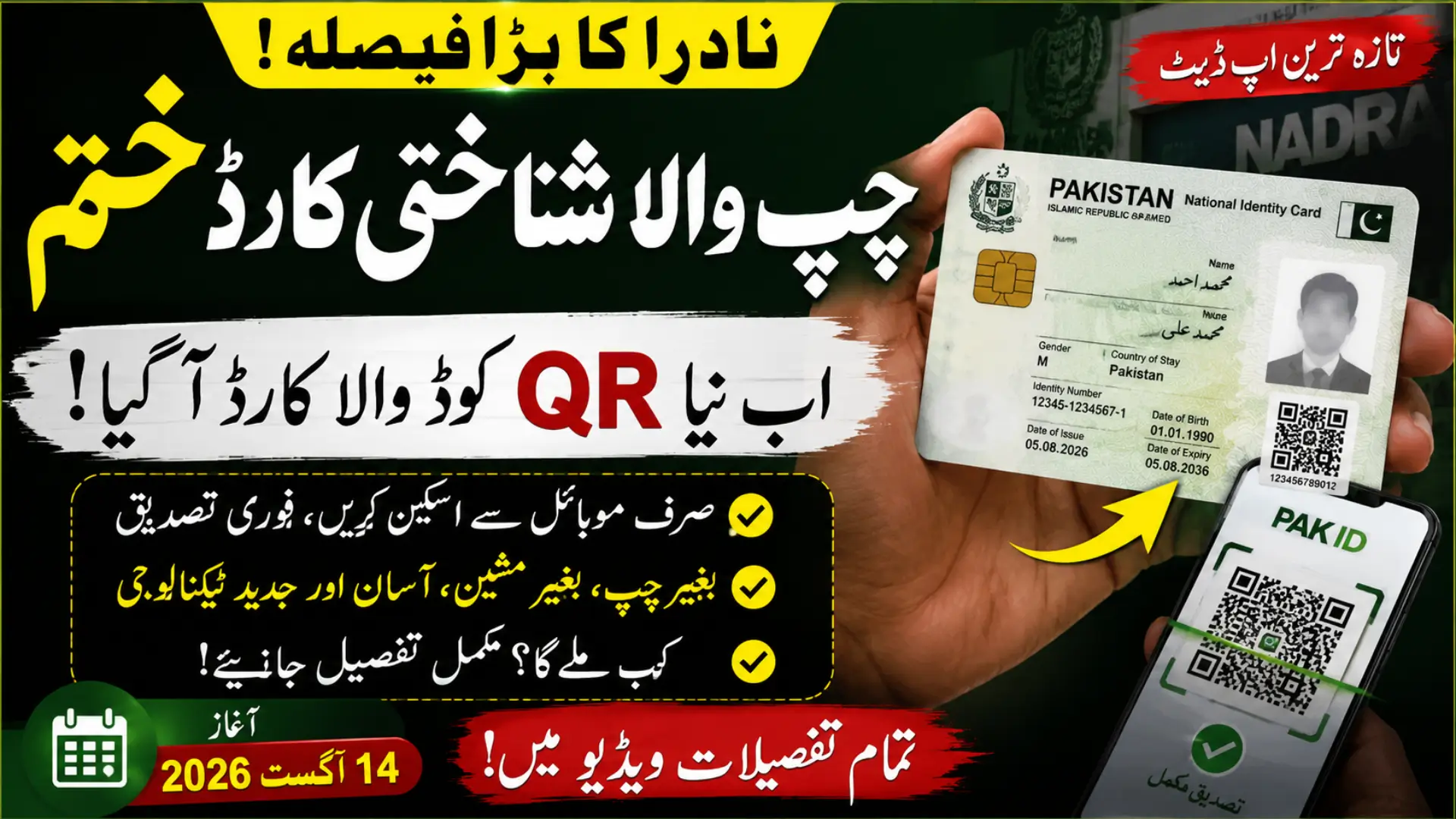
NADRA New ID Card
For the last 14 years, every Pakistani has carried a Smart National Identity Card with a tiny microchip embedded inside it. That chip was supposed to make identity checks faster and safer. In reality, most offices, banks, and even government departments never got the chip readers needed to actually use it. So the chip just sat there, unused, while the card kept doing its job the old-fashioned way.
That’s finally changing. On August 14, 2026, NADRA rolled out a brand-new National Identity Card that drops the microchip completely and replaces it with a secure QR code. You can scan it with any regular smartphone. No special reader, no extra hardware, no waiting for infrastructure that never arrived. Here’s everything you need to know about the new card, why it was introduced, and when you’ll actually get one.
What Exactly Is the New NADRA QR Code ID Card
The new card is officially a chipless National Identity Card, and it’s built around a secure, machine-readable QR code instead of the old embedded chip. The federal government gave formal approval for this design on February 23, 2026, after NADRA worked out the technical details with local manufacturing partners.
Unlike the previous chip-based card, which relied on an imported component, this one is made entirely inside Pakistan. That single change carries a lot of weight. It means the country no longer has to depend on a foreign supplier just to produce a basic ID card, and it also means the verification technology behind it can actually be used by ordinary people with ordinary phones, rather than sitting idle like the old chip did.
Punjab School Education Department Jobs 2026: 13 New Vacancies, Eligibility & Apply Online
Who Made the Card and Where
The card is manufactured by the National Security Printing Company, or NSPC, based in Karachi. NSPC built the card to match NADRA’s technical and security specifications, which means every visible and hidden security feature had to be tested and approved before production began.
This is a notable shift from the earlier Smart ID Card era, when the microchip inside every card came from an overseas vendor. Producing the entire card domestically, from the polycarbonate material to the printed security layers, gives NADRA more control over cost, supply, and quality. It also reduces the risk of delays that come from depending on international shipments or chip shortages, something that became a real headache for governments worldwide in recent years.
How the QR Code Verification Works
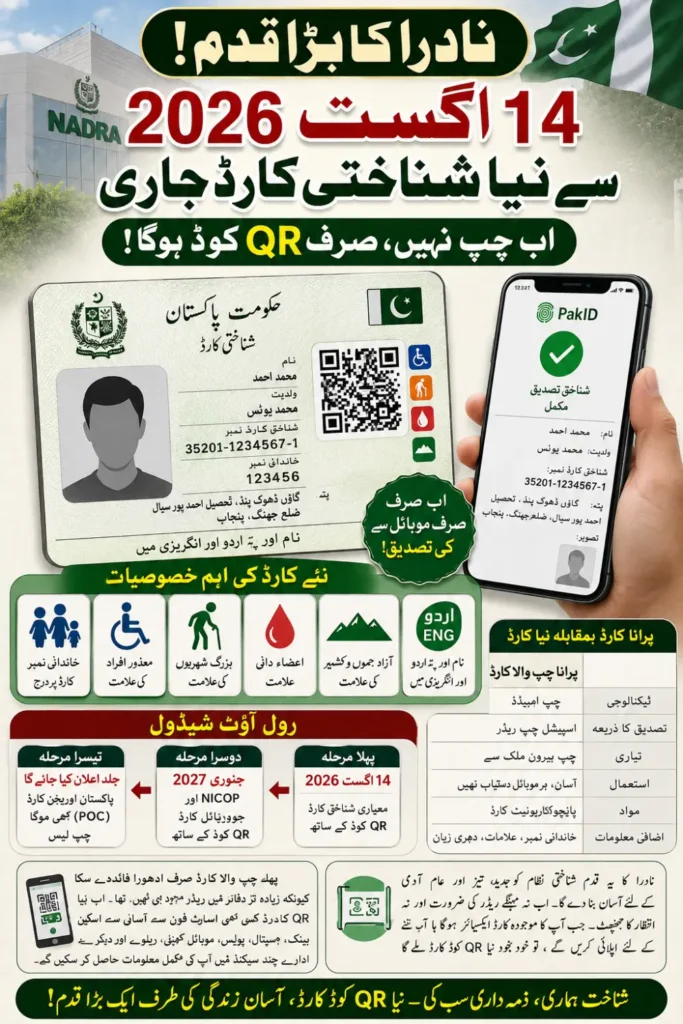
Instead of a chip, the card now carries a secure QR code that stores the cardholder’s core identity details along with their photograph. To read it, you simply open NADRA’s official Pak Identity app, known as PakID, on a smartphone and scan the code.
There’s no need for specialized chip-reading machines anymore. Any camera-equipped device running the right software can pull up the cardholder’s verified information almost instantly. This matters because it directly fixes what went wrong with the old chip system. Institutions like banks, hospitals, and telecom companies were never equipped with chip readers on a large scale, so the smart chip’s real potential was mostly wasted. A QR code that works with a phone camera removes that barrier entirely.
What Institutions Will Use It For
NADRA isn’t just handing out a new card and hoping people figure out verification on their own. The authority is actively distributing scanning software to organizations that regularly need to confirm someone’s identity.
- Telecom operators, for SIM registration and customer verification
- Banks, for account opening and financial transactions
- Hospitals, for patient records and identity confirmation
- Pakistan Railways, for ticketing and travel checks
- Police departments, for on-the-spot identity verification
Because the QR code carries the cardholder’s name, address, and photograph in a structured digital format, these institutions can pull the data straight into their computer systems. That cuts down on manual typing, which is one of the biggest sources of errors in identity records across Pakistan.
New Features Printed on the Card
Beyond the QR code itself, the physical design of the card has been updated too. NADRA added a few details that weren’t as clearly marked on older cards, aimed at making the card more informative at a glance.
- Family number printed directly on the card
- Special symbols for persons with disabilities
- Special symbols for senior citizens
- Special symbols for organ donors
- Special symbols for citizens of Azad Jammu and Kashmir
- Cardholder’s name and address printed in both Urdu and English
These additions aren’t just cosmetic. They help institutions quickly identify special categories of citizens without needing to cross-check separate databases, which can speed up services like priority queues, healthcare access, or benefit programs tied to specific groups.
Rollout Timeline: When You’ll Get the New Card
NADRA isn’t switching everyone over at once. The transition is happening in three distinct phases, spread out over more than a year to make sure the system and infrastructure can keep up with demand.
| Phase | Start Date | What Changes |
|---|---|---|
| Phase 1 | August 14, 2026 | Standard National Identity Card switches to the QR code format |
| Phase 2 | January 2027 | NICOP and Juvenile Cards also move to the QR code format |
| Phase 3 | To be announced | Pakistan Origin Card (POC) transitions to the chipless format |
If you already have a valid identity card, whether it’s the older chip-based Smart Card or an even older version, you don’t need to panic or rush to any NADRA office. NADRA has clearly stated that all previously issued cards remain valid until their printed expiry date. You’ll only get the new QR code card when your existing one expires or when you apply for a fresh one after your phase begins.
Old Chip Card vs New QR Code Card: A Quick Comparison
It helps to see the two card generations side by side, especially if you’re wondering what’s actually different beyond the obvious QR code.
| Feature | Smart Chip Card (Old) | Chipless QR Code Card (New) |
|---|---|---|
| Core technology | Embedded microchip | Secure QR code |
| Manufacturing | Chip imported from abroad | Fully manufactured in Pakistan by NSPC |
| Verification tool | Specialized chip reader | Any smartphone with PakID app |
| Real-world usability | Limited, readers rarely available | Wide, works with existing phones |
| Material | Smart chip embedded card | Polycarbonate card |
| Extra identifiers | Basic details only | Family number, special category symbols |
| Language on card | Limited bilingual printing | Full Urdu and English for name and address |
The biggest practical difference is accessibility. A chip is only useful if someone has a machine built to read it. A QR code works with a device that almost every adult in Pakistan already carries in their pocket.
Why This Matters for Everyday Verification
Think about how many times you’ve had to show your ID card just to get a SIM registered, open a bank account, or check into a hospital. In most of those situations, the person checking your card was reading it visually, not using any embedded technology, because the infrastructure for chip-based checks simply wasn’t there in most branches or offices.
With the QR code system, that changes in a very direct way. A bank teller or hospital receptionist with the right app installed can scan your card and instantly pull verified details, matching your photo and information without manually typing anything. This reduces both the time spent on verification and the chances of a data-entry mistake, something that has caused real problems for people whose names or addresses were misspelled in official records over the years.
Conclusion
NADRA’s new chipless QR code identity card isn’t just a cosmetic redesign. It fixes a 14-year-old problem where a supposedly “smart” chip sat unused because the country never built the infrastructure to read it. By switching to a QR code that works with any smartphone, manufacturing the card entirely within Pakistan, and rolling it out in clear phases starting August 14, 2026, NADRA has made identity verification something that can actually work at scale. If your card is still valid, there’s nothing you need to do right now. When it’s time to renew, you’ll get the new version automatically, along with a card that’s easier for institutions to verify and easier for you to use.
Punjab Shrimp Farming Project 2026: Locations, Investment, Benefits and Latest Updates
Frequently Asked Questions
Is the old chip-based Smart ID Card still valid after this launch? Yes. NADRA has confirmed that all previously issued cards, including the chip-based Smart ID Card, remain valid until their printed expiry date.
Do I need a special device to scan the new QR code card? No. Any smartphone with a camera can scan the code using NADRA’s official PakID mobile application, no special chip reader needed.
When will overseas Pakistanis get the new QR code NICOP? NICOP and Juvenile Cards are scheduled to move to the new QR code format starting January 2027, as part of the second rollout phase.
Who manufactures the new chipless identity card? The card is manufactured entirely in Pakistan by the National Security Printing Company, based in Karachi, according to NADRA’s technical specifications.
What information does the QR code on the card actually store? The QR code contains the cardholder’s core identity details along with their photograph, which authorized institutions can scan and verify instantly.