Apna Khet Apna Rozgar Scheme 2026: Punjab Begins 5-Acre Land Allotment
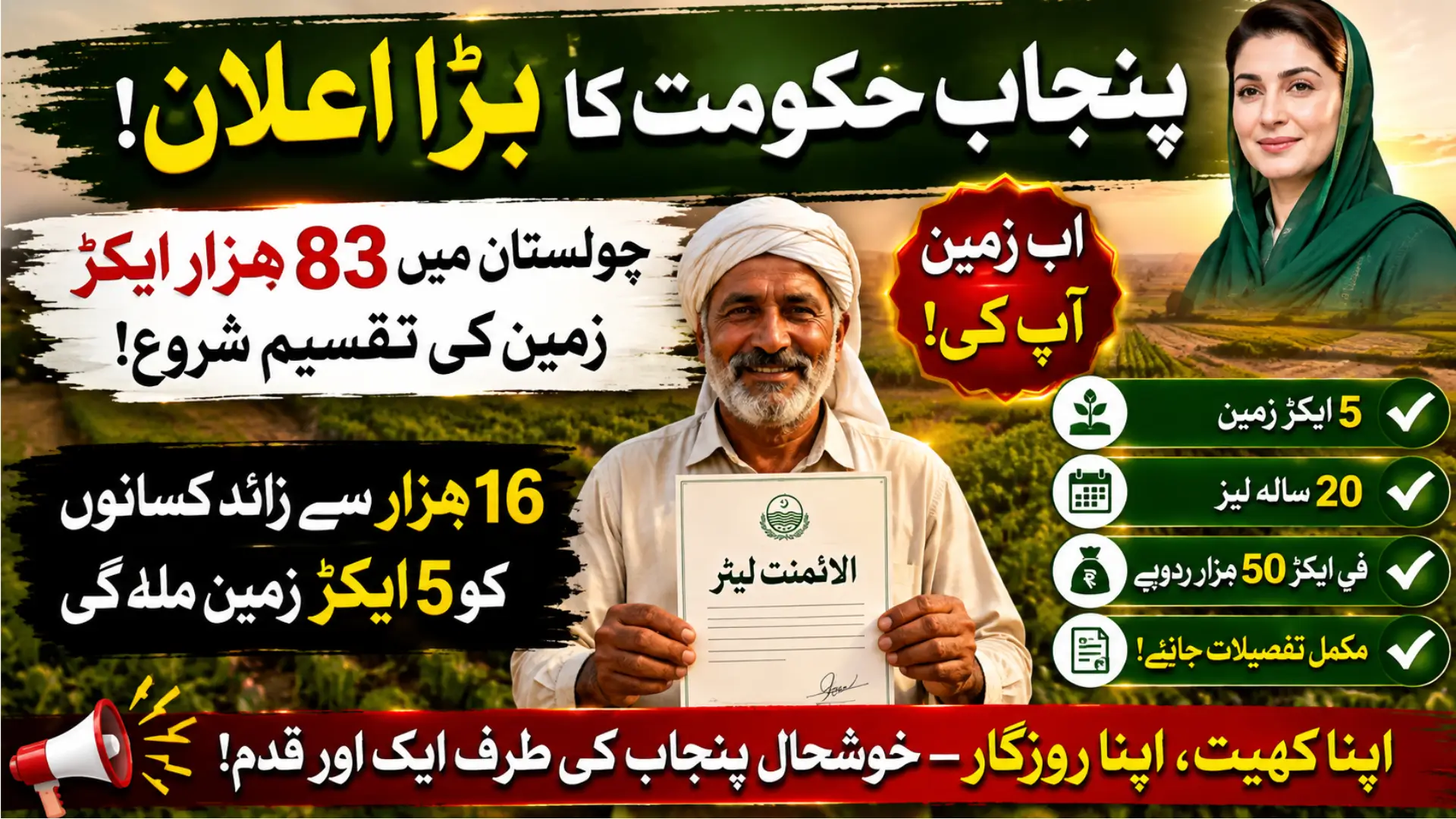
Apna Khet Apna Rozgar Scheme
The Punjab government has finally moved from paperwork to action on its Apna Khet Apna Rozgar (AKAR) scheme. After months of applications and balloting, officials have started physically handing over allotment letters to farmers in Cholistan, one of the driest and most neglected parts of the province.
This isn’t just another government announcement. Real families in Bahawalpur are now holding land documents in their hands, and thousands more are waiting for their turn. In this article, we’ll break down what the Cholistan launch means, how much land is involved, who qualifies, and what you should do if your name comes up in the list.
What Is the Apna Khet Apna Rozgar Scheme?
Apna Khet Apna Rozgar, often shortened to AKAR, is Punjab’s plan to give landless and poor rural families access to government-owned agricultural land. Instead of one-time cash handouts, the government is leasing out cultivable land so families can farm it, earn a living from it, and eventually build financial stability for themselves.
The scheme launched earlier in 2026 and picked up serious momentum by July, when Chief Minister Maryam Nawaz announced the results of a computerized balloting that selected 30,000 families across Punjab for roughly 121,000 acres of land. Cholistan, being one of the largest chunks of unused but potentially farmable land in the province, quickly became the centerpiece of the whole program.
Maryam Ko Batayn Application 2026 Check Status, Eligibility & Payment
Cholistan Launch: 83,000 Acres Now Being Distributed
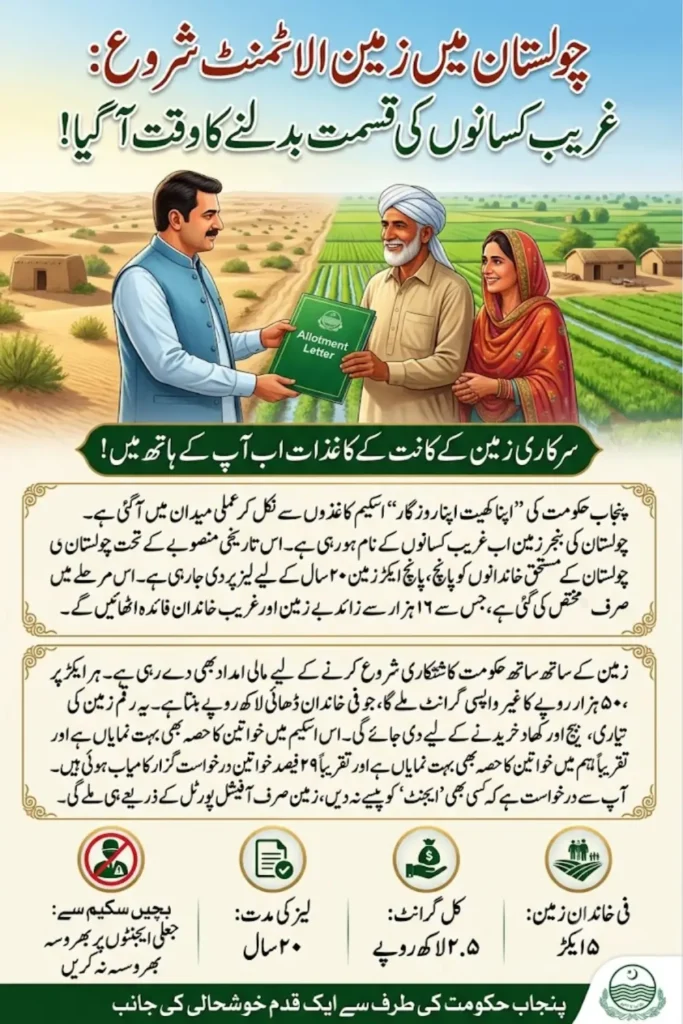
In early August 2026, the Punjab government formally kicked off land distribution in Cholistan. According to the Bahawalpur commissioner, 83,000 acres have been set aside in the region, making it the single largest allocation anywhere under the scheme so far.
At a launch ceremony, officials handed over allotment letters to the first 25 successful applicants as a symbolic start to the rollout. More than 16,000 families in Cholistan are expected to eventually receive five acres each once the full process is complete. The Cholistan Development Authority (CDA), which manages applications for this region, said it received over 52,000 applications, and around 27,647 of them cleared the verification stage.
How Many Families Will Get Land in Cholistan
The numbers behind the Cholistan rollout are large, but they’re being released in phases rather than all at once. Here’s a quick look at where things currently stand.
| Detail | Figure |
|---|---|
| Total land earmarked in Cholistan | 83,000 acres |
| Total applications received | 52,158 |
| Applications verified/approved | 27,647 |
| Families expected to benefit (five acres each) | 16,000+ |
| Families allotted in first phase | 10,290 |
| Allotment letters handed at launch ceremony | 25 |
The first phase covers just over 10,000 households, which means the bulk of applicants are still waiting for their turn. Officials have not given an exact date for when the remaining families will receive their letters, so it’s worth checking the official portal regularly rather than relying on rumors.
What Selected Families Actually Receive
Getting picked in the balloting is only step one. The real value of the scheme lies in what comes with the land itself, and this is where a lot of confusion happens online. People often assume this is free land they can sell or build a house on, which isn’t true. It’s a long-term agricultural lease, not ownership.
Each family in Cholistan is set to receive five acres of land, while families in other Punjab districts outside Cholistan generally get four acres. Along with the land, the government is releasing a financial package to help families actually start farming, since bare land without money for seeds or irrigation setup is not much use to a poor household.
| Benefit | Details |
|---|---|
| Land size (Cholistan) | 5 acres per family |
| Land size (other districts) | Up to 4 acres per family |
| Lease duration | 20 years, renewable after 10 |
| Annual lease fee | Rs. 100 per acre |
| Financial support for land prep | Rs. 50,000 per acre |
| Maximum grant (5 acres) | Up to Rs. 250,000 per family |
| Total provincial funding announced | Rs. 4.25 billion |
| Technical support | Agriculture Extension Department |
That Rs. 50,000 per acre grant is meant to cover early costs such as leveling the land, arranging irrigation, buying seed and fertilizer, and general setup. For a full five-acre plot, that adds up to Rs. 250,000, which sounds like a lot but agricultural experts have pointed out it may not stretch far in a place like Cholistan where water infrastructure is limited.
Eligibility and What You Need to Apply
The 2026 application window for AKAR has already closed, so this section is mainly useful for people checking whether they qualified or trying to understand the criteria the government used during selection. Priority went to households that genuinely had no other land or income source.
The main eligibility points the government used were:
- The applicant did not already own agricultural land
- The family had no stable or reliable source of income
- The applicant or their household had some connection to farming or agricultural labor
- Preference was given to the most financially vulnerable households in the area
- Women applicants were actively encouraged, with a reserved quota built into the selection process
Women’s participation has actually been one of the more notable parts of this rollout. Around 20 percent of successful applicants province-wide are women, and in the Cholistan balloting specifically, close to 29 percent of applicants were women, a much higher share than officials initially expected.
Protecting Yourself From Scams and Fake Agents
Whenever a government scheme involves free money or land, scammers show up quickly. This has already started happening with AKAR, with fake agents and WhatsApp groups claiming they can get people selected or “fix” a rejected application for a fee. None of that is true, and falling for it can cost people money they can’t afford to lose.
A few things worth keeping in mind if you’re dealing with your AKAR application or result:
- Never share your CNIC photo, OTP, or portal password with anyone claiming to be an agent
- The scheme never required applicants to pay a private individual for selection
- Always verify your status through the official AKAR portal or your district administration office, not through social media posts
- Take a screenshot of your result page and application number for your own records
- If your name is missing or there’s an error, go directly to the Assistant Commissioner or Deputy Commissioner office rather than trusting a stranger’s advice online
If something feels off, it probably is. Genuine updates about land position and allotment letters come through official government channels, not through random callers or social media pages pretending to represent the scheme.
Water Is the Real Challenge in Cholistan
Not everyone is convinced the scheme will work smoothly, and it’s worth being honest about that. Cholistan is a desert region, and water availability has always been its biggest obstacle to farming. Agricultural experts, including representatives from farmer groups, have pointed out that even large corporate farming projects have struggled to make Cholistan land productive because of limited water access.
There’s also concern that the Rs. 250,000 grant for a five-acre plot may not be enough to properly develop barren desert land from scratch. In response, the government has said land in Cholistan will only be allotted where water availability has already been confirmed, using GIS-based mapping to check irrigation access and soil quality before including a plot in the allotment pool. Whether this planning holds up once families actually start farming will become clearer over the next couple of growing seasons.
What Happens Next for Applicants
If you’re one of the families waiting for land in Cholistan or elsewhere in Punjab, patience is going to matter more than anything right now. The process is being rolled out in phases, and the first batch of just over 10,000 families is only the beginning.
Once your allotment letter arrives, the next step is coordinating with your district committee and the Agriculture Extension Department before making any big decisions about what crop to plant. Rushing into farming without proper guidance on soil type, water source, and market demand can waste an entire season’s worth of the grant money. It’s worth keeping a simple file of every document, receipt, and visit related to your land, since it may be needed later if any dispute comes up over the lease.
Conclusion
The Cholistan rollout marks a real turning point for the Apna Khet Apna Rozgar scheme, moving it from a balloting announcement to actual land handovers on the ground. With 83,000 acres and over 16,000 families involved, this is one of the biggest rural land distribution efforts Punjab has attempted in recent years. The scale is impressive, but so are the challenges, especially around water in Cholistan. For now, the smartest thing applicants can do is stay in touch with official channels, avoid scams, and be ready to make good use of the support once their land finally arrives.
Punjab Parwaaz Card Online Apply 2026 Complete Eligibility & Application Guide
Frequently Asked Questions
1. How much land will Cholistan families get under AKAR? Most families in Cholistan will receive five acres of government land on a 20-year lease. This is slightly more than the four acres typically allotted in other Punjab districts.
2. How many families have actually received allotment letters so far? Only 25 families received letters at the launch ceremony as a symbolic start. The first full phase covers 10,290 families, with more than 16,000 expected eventually.
3. Is the Rs. 50,000 per acre grant a loan or free support? It’s a one-time financial grant, not a loan, meant to help cover early farming costs like land preparation, seed, and irrigation setup. Families don’t need to repay it.
4. Can I still apply for AKAR in 2026? No, the main application window has closed and the current phase is focused on verification and allotment. Any claim of new applications being open should be checked against the official portal first.
5. Does the AKAR lease mean I own the land permanently? No, it’s a 20-year lease with renewal after 10 years, not permanent ownership or a sale deed. The final lease certificate explains the exact legal terms and conditions.